Email Tracking and Privacy Compliance
Learn how email tracking and privacy compliance work together, from open and click tracking to lawful basis, retention, and transparency.
What email tracking means in practice
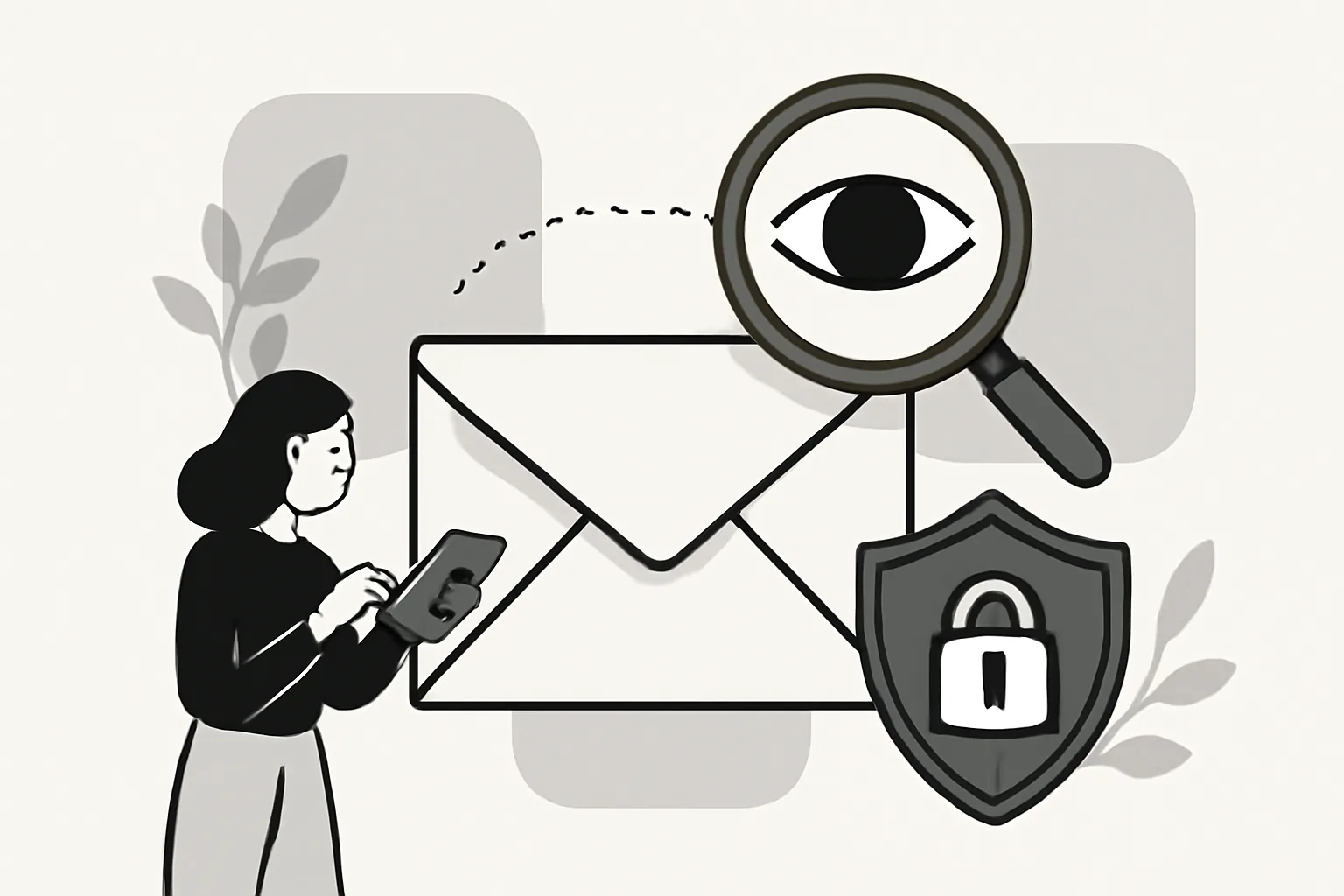
Email tracking sounds technical, but the basics are plain enough. A business sends a message, then watches what happens next: did it open, did someone click, did it bounce, did it arrive at all. Those signals help sales teams follow up, help support teams confirm delivery, and help marketers judge whether a campaign did anything useful.
Three tracking types show up most often. Open tracking usually relies on a tiny image pixel. Click tracking rewrites links so the sender can record the click before sending the reader onward. Delivery tracking records whether the message reached the mailbox, which matters for transactional mail as much as for campaigns. One detail changes the meaning of the data: a delivered email is not the same as a read email.
That difference matters. A newsletter can show 40 opens and still drive zero sales. A payment receipt can show no opens and still do its job, because the customer may have seen it in preview or on a mobile lock screen. For teams that care about performance, the numbers are useful. For teams that care about trust, the numbers are not free.
Modern email tracking also extends beyond the inbox. Some systems record device type, approximate location, timestamp, and repeated opens from the same address. Those data points can help a sender prioritize a lead or spot a broken send flow, but they also create a record of behavior. One pixel can say a lot.
For delivery-heavy teams, pairing tracking with sound authentication and inbox placement habits makes sense. A strong starting point is email authentication setup for transactional email, because tracking data is much less useful if messages never land where they should. The same goes for sender reputation. Bad delivery makes every metric look shaky.
Why privacy compliance matters for tracked emails
Privacy compliance is not just a legal box to tick. It shapes what users expect, what a company may collect, and how much detail the business should really need. A subscriber may accept a newsletter, but not assume that every open is being logged forever. That gap between expectation and practice is where complaints begin.
Consent matters in some cases, and legitimate interest or another lawful basis may matter in others, depending on the law and the use case. The point is not to guess. The point is to know why the tracking exists, what is collected, and whether a person would reasonably expect it. If the answer is muddy, the compliance story is muddy too.
Trust is not abstract here. A customer who learns that a support email was tracked more closely than expected may stop replying, or they may ask for deletion, or they may call the practice creepy. That reaction is not irrational. Email tracking and privacy compliance have to sit together, because one without the other can damage relationships fast.
Data minimization helps. If the business only needs to know whether a campaign link was clicked, it should not store device fingerprints for six months. If a sales rep only needs an alert that a prospect opened an email, they probably do not need a detailed behavioral timeline. Less data means less risk. Simple.
There is also an ethical edge. A person’s mailbox feels private, even if it is work email. Tracking can be technically invisible and still feel invasive once explained plainly. That is why privacy notices should read like something a human would actually understand, not a form drafted by committee.
Key privacy and data protection principles
Transparency is the first principle. People should be told, in clear terms, that tracking is happening and what kind of tracking it is. If an organization uses an open pixel, says so. If click data is retained for 90 days, say that too. Hidden tracking creates avoidable friction.
Lawful basis comes next. A company needs a valid reason to process tracking data, and the reason should match the use. Consent may be required for some forms of tracking in some jurisdictions; for other uses, the business may rely on legitimate interest, but only after balancing its needs against the person’s rights. That balance should be documented, not guessed at in a hallway.
Purpose limitation keeps the data from drifting. If the business collects open data to improve onboarding emails, it should not later reuse that same data for unrelated profiling without fresh review. A support team should not inherit marketing tracking data just because it exists in the system. One purpose, one reason.
Retention controls matter just as much. If click logs live forever, they become a history file no one can explain. Set a limit, assign a deletion rule, and check whether the data still serves the original purpose after 30, 60, or 180 days. Old tracking data tends to outlive its value.
Access control closes the loop. Not every employee needs the same view. A support agent may need delivery status, while a marketer may need campaign clicks, and neither should see more than the job requires. That is one place where a simple permission matrix helps more than a long policy paragraph.
Common laws and regulations to consider
GDPR often comes up first for organizations that send to people in the European Economic Area, but it is not the only framework that can matter. The ePrivacy rules may affect tracking pixels and cookies in email-adjacent contexts, depending on the setup. CCPA and CPRA may affect California residents and the way data is disclosed, shared, or sold. Regional rules change the answer.
Different laws focus on different parts of the same practice. GDPR asks about lawful basis, transparency, and individual rights. ePrivacy may be stricter about electronic tracking technologies. CCPA and CPRA tend to focus on notice, access, deletion, and certain sharing choices. That means one email tracking policy can fail in several different ways if it treats every audience as identical.
Cross-border sending makes this harder. A company based in Austin may send to Berlin, Toronto, and Sydney on the same morning. The legal analysis does not stay in one country just because the marketing team does. For teams that send transactional mail at scale, pairing policy with tools like email webhook events for transactional emails can help document events without collecting more than necessary.
Some sectors face extra rules. Healthcare, finance, education, and employment-related communications can carry special obligations. A benefits email to employees is not the same as a retail promotion to customers, even if both include the same tracking pixel. Context changes the compliance burden.
Local counsel still matters. A single “global” answer often misses national details, especially around consent and electronic communications. If the audience includes the EU, the UK, and U.S. states with privacy statutes, legal review is not optional. It is the part that keeps the policy from being decorative.
Risks of noncompliance in email tracking
Noncompliance starts small. A privacy notice omits tracking. A form collects consent but never stores the record. A campaign manager exports open data into a spreadsheet and shares it with the wrong group. Any one of those can create exposure, and together they can show a pattern.
The biggest risk is usually inadequate disclosure. If people were never told that the message contains tracking, the sender may not have a lawful basis at all. Another risk is overcollection: recording more data than the business needs, or keeping it longer than promised. Both can turn a normal marketing practice into a compliance problem.
There is also the issue of internal misuse. A sales manager may use tracking data to pressure a prospect who has clearly gone quiet. A supervisor may inspect employee email opens to infer attention or attitude. Those uses are not harmless, and they can cross legal or HR lines quickly. One misuse can change company culture.
Vendor risk matters too. If a third-party platform stores click data in ways the business did not approve, the organization may still be responsible for the result. The team that bought the tool does not escape the consequences just because the logs sit elsewhere. Contracts help, but they do not erase responsibility.
Even operational mistakes can become compliance issues. A broken pixel can falsely suggest a user engaged, while a tracking link can fail in a privacy-sensitive environment and still collect a click before redirecting. Testing matters. So does recordkeeping. For teams that want to compare their setup against the basics, email deliverability best practices can help separate delivery problems from tracking problems.
How to make email tracking more compliant
Start with a clear notice. Say what is tracked, why it is tracked, who receives the data, and how long it is kept. The notice should appear where people sign up or where the relationship begins, not buried in a legal page nobody reads. One plain paragraph beats five vague ones.
Consent management should match the law and the use case. If consent is required, make it specific and easy to withdraw. Do not bundle tracking with unrelated permissions. If a user opts out, the system should honor that choice within a defined time, not sometime later when the team gets around to it.
Consider alternatives to invasive tracking. A visible click through a landing page can provide useful campaign data without collecting as much detail as a multi-step tracker. Some teams also separate open metrics from identity where possible, reducing how much personally identifiable information is tied to behavior. The goal is not zero data. The goal is the right data.
Access controls and logging should be strict. Keep tracking data in systems with role-based permissions, record who viewed what, and restrict exports. A spreadsheet downloaded by three people is harder to defend than a platform with audit trails. If a tool cannot show who touched the data, that is a warning sign.
Privacy-by-design should happen before launch, not after a complaint. Review the email template, the pixel, the retention schedule, the vendor terms, and the deletion process together. If the process includes newsletters, onboarding, and account notices, treat each stream separately. A single policy often misses at least one of them.
Testing belongs in the process too. A campaign should be checked not only for rendering but for tracking behavior in browsers, mobile clients, and privacy tools. Teams that already test inbox placement can also compare tracking behavior with email deliverability test tools · YourTrend. One unexpected blocker can make the whole measurement plan unreliable.
Best practices for marketers, sales teams, and customer support
Marketers should keep tracking tied to the campaign goal. If the goal is signups, measure clicks and conversions first. If the goal is education, opens may be less meaningful than time-sensitive replies or landing-page visits. A weekly report with 12 metrics can distract more than it helps.
Sales teams need restraint. Tracking can indicate interest, but it should not become a surveillance habit. A prospect who opens three times may be curious, or they may just have a crowded inbox. Follow up once, maybe twice, and stop if there is silence. The number is a clue, not a confession.
Customer support teams should use tracking carefully and only when it improves service. If a case email did not arrive, delivery tracking is useful. If a customer says they never saw the instructions, a support agent can check whether the message bounced or landed in spam. For that kind of workflow, email bounce handling best practices can keep the process cleaner and more accurate.
Support also needs a tone check. A reply that says “we noticed you opened this three times” can sound accusatory even if it was meant to be helpful. Better wording is concrete and neutral: “We want to make sure the file reached you, so I am checking delivery.” That one sentence changes the conversation.
All three teams should understand suppression. If someone opts out of marketing, that preference should not be ignored because the sales team wants one more sequence. A central process helps. So does email suppression list management · YourTrend, especially where consent, opt-out, and retention need to stay aligned across tools.
Building a privacy-first email tracking policy
A good policy starts with ownership. Name the person or team responsible for tracking decisions, not just the person who uploads campaigns. That role should review templates, vendors, retention periods, and complaint handling. If nobody owns the policy, the policy will drift.
Document the rules in plain language. Include what gets tracked, which departments can access it, what the retention period is, how deletion works, and how exceptions are approved. Write the 5 most likely scenarios: newsletter opens, transactional clicks, support confirmations, employee communications, and unsubscribe handling. Those scenarios cover most day-to-day questions.
Vendors should be reviewed on a schedule, not only at purchase time. Ask where the data is stored, how long it is retained, whether sub-processors are used, and how deletion requests are handled. A vendor that cannot answer directly should not get a pass just because the dashboard looks polished. Contracts matter, but technical review matters too.
Policy updates should happen after changes in law, product design, or sender behavior. If the team adds new tracking fields or starts sending to a new region, the policy needs another look. A quarterly review is a practical rhythm for many businesses, though higher-risk teams may need shorter intervals. One review a year is often not enough.
Training should be short and repeated. A 20-minute session for marketing, sales, and support can stop the most common mistakes before they happen. Pair that with examples: one acceptable use, one unacceptable use, and one case where the team needs legal review. People remember examples faster than policy language.
Finally, keep the policy connected to the rest of email operations. Authentication, deliverability, bounce handling, unsubscribe flow, and tracking all touch the same message stream. If the message itself is poor, the tracking data will mislead. If the tracking is careless, the message may be legally fine but still damage trust. That tension is where the real work sits.
On this page
← All articlesOne click. It tells us what to write next.
No ratings yet — yours would be the first.
Comments
Comments are read before they appear.